Electricity bills are a major concern for many homeowners and businesses in Pakistan. Whether you live in Karachi, Lahore, Islamabad, or another city, you’ve probably wondered whether installing solar panels could meaningfully reduce your monthly expenses.
But how much money can you actually save with solar panels in Pakistan in 2026? And more importantly, how long does it take to recover your initial investment?
The answer depends on several factors, including your electricity consumption, the size of your solar system, installation costs, sunlight availability, and how much of the generated electricity you use directly.
In this guide, we’ll explain solar panel savings, compare 5kW and 10kW systems, examine installation costs, and show you how to estimate your return on investment (ROI).
You can also use the free Solar Savings & ROI Calculator by Mahendus Power Solution to get a personalized estimate before investing.
Solar panels can reduce the amount of electricity you purchase from the grid by generating power during daylight hours.
For example, if you regularly operate air conditioners, refrigerators, fans, computers, or other appliances during the day, solar energy can offset a portion of your electricity consumption.
However, installing solar panels doesn’t automatically eliminate your entire electricity bill.
Your actual savings depend on:
Electricity consumption: How many units (kWh) your household or business uses monthly.
System capacity: Whether you install a 3kW, 5kW, 10kW, or larger solar system.
Daytime electricity usage: How much solar energy you consume directly.
Electricity tariffs: The applicable rates, taxes, and charges on your bill.
Solar generation: The sunlight your rooftop receives throughout the year.
Grid export arrangements: How exported electricity is credited under your applicable agreement.
Battery storage: Whether you install batteries to store energy for nighttime use or power outages.
A well-designed system can deliver meaningful savings, but accurate financial planning requires considering all these variables.
Before estimating savings, it’s important to understand the investment required.
Solar installation costs vary according to panel brand, inverter quality, mounting structure, batteries, installation complexity, and supplier.
Recent October 2026 market estimates suggest the following indicative ranges:
| Solar System | Estimated Installed Cost |
|---|---|
| 3kW On-Grid | PKR 340,000–490,000 |
| 5kW On-Grid | PKR 560,000–760,000 |
| 10kW On-Grid | PKR 1,030,000–1,300,000 |
| 5kW Hybrid with 5kWh Battery | PKR 760,000–1,110,000 |
These are indicative market estimates, not fixed Mahendus quotations. Actual prices vary by equipment, installation design, city, and included components.
A hybrid solar system generally costs more because it includes battery storage and compatible equipment. However, batteries can provide additional value where electricity outages are frequent.
Before choosing a system, request a detailed quotation that clearly specifies panels, inverter, installation materials, warranties, batteries, and after-sales services.
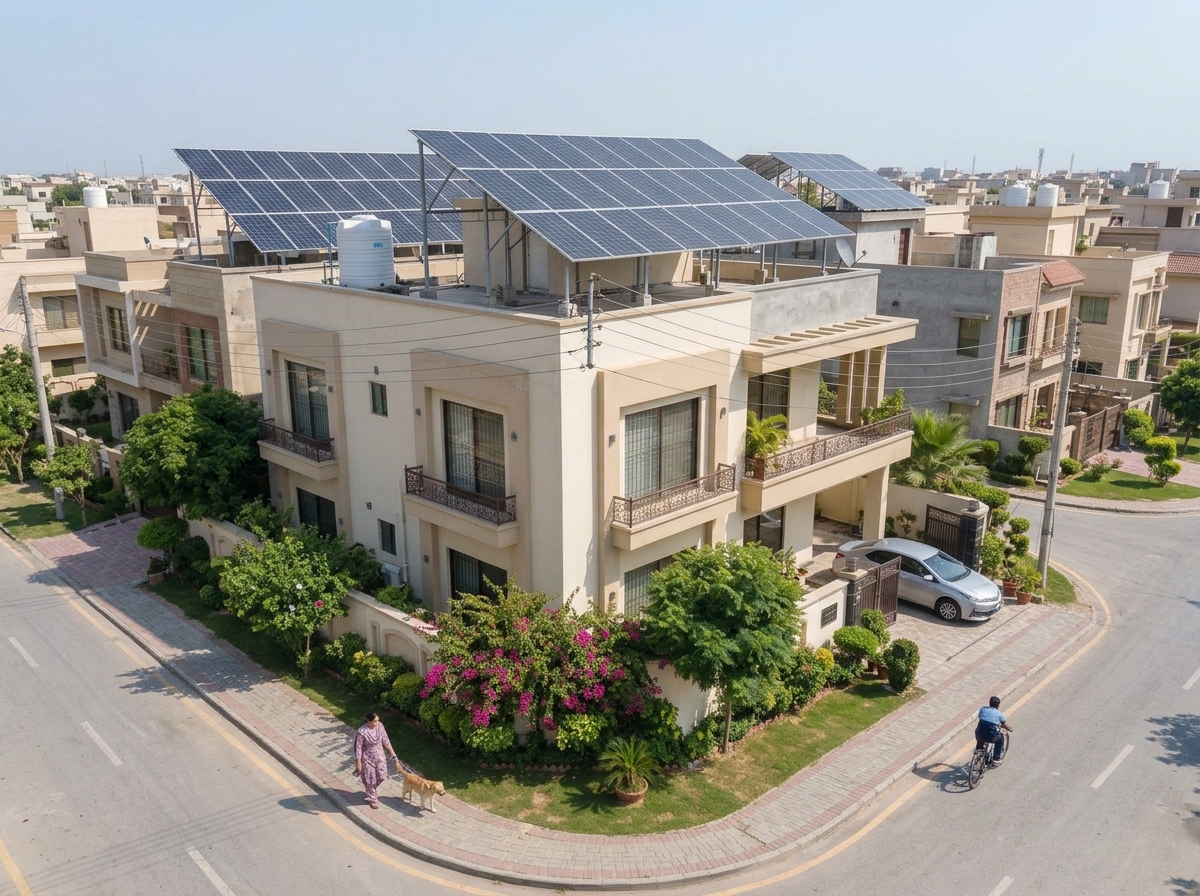
A 5kW solar system is a common residential option for households looking to offset a meaningful portion of their electricity consumption.
The actual electricity generated depends on local solar conditions, panel orientation, shading, temperature, and overall system efficiency.
Let’s consider an illustrative household scenario:
| Factor | Example Value |
|---|---|
| Installed solar capacity | 5kW |
| Monthly solar generation | 600 kWh |
| Solar energy consumed directly | 70% |
| Directly used solar electricity | 420 kWh |
| Assumed avoided electricity cost | PKR 35/kWh |
| Estimated monthly savings from direct consumption | PKR 14,700 |
| Estimated annual savings | PKR 176,400 |
In this example, the household saves approximately PKR 14,700 per month from electricity consumed directly during solar generation hours.
The remaining 180 kWh is not assigned a savings value here. Its financial value depends on whether it can be exported under an approved arrangement, stored for later use, or is otherwise unused.
The PKR 35 per unit rate is a hypothetical calculation assumption, not a universal electricity tariff.
Suppose the 5kW system costs PKR 650,000.
Estimated payback period:
PKR 650,000 ÷ PKR 176,400 annual savings = approximately 3.7 years.
This is a simplified payback estimate before maintenance, equipment replacement, financing costs, and changes in electricity tariffs.
Actual results may be better or worse depending on the installation and energy usage pattern.
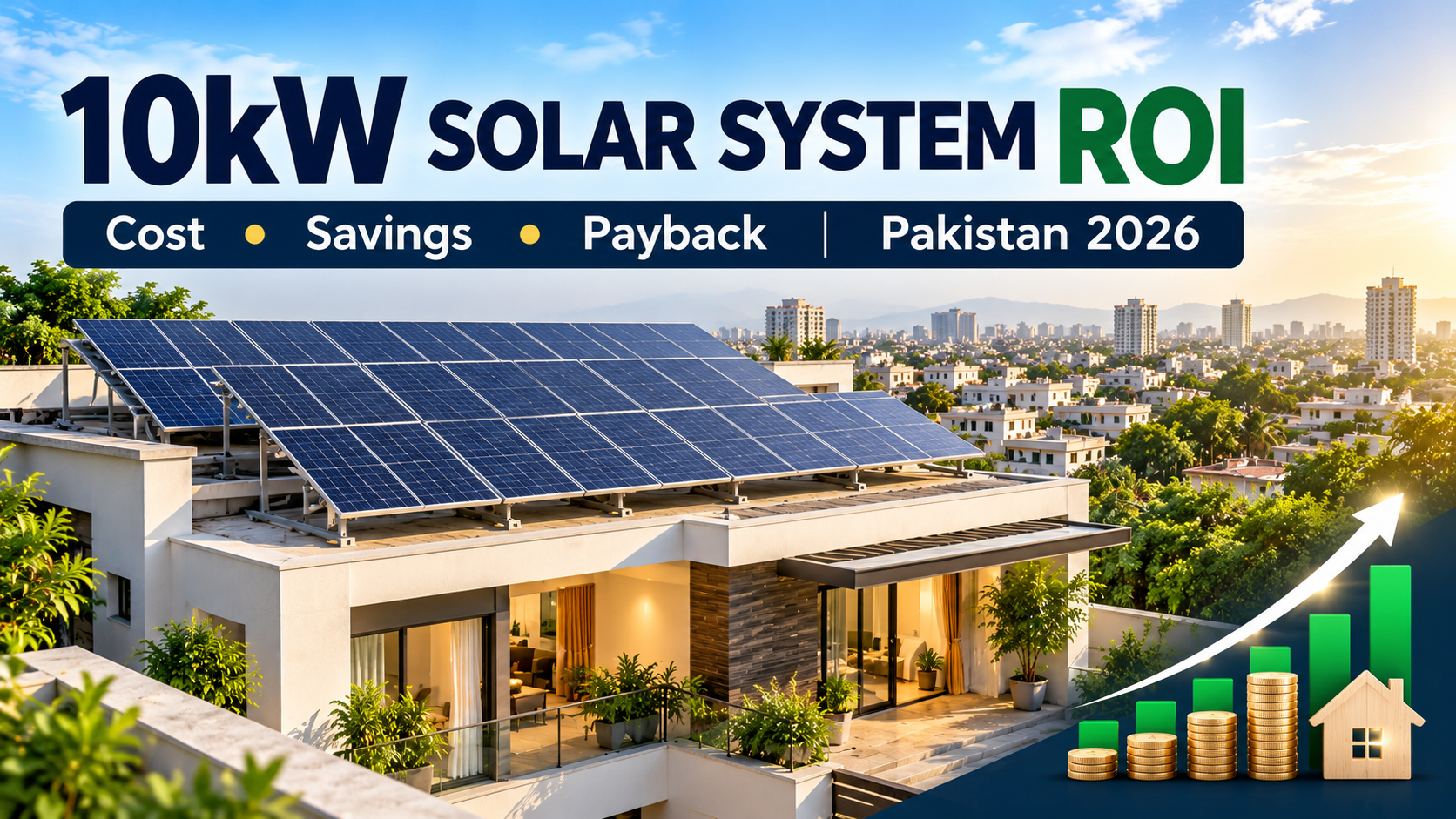
A 10kW solar system may suit larger households, businesses, or properties with higher daytime electricity consumption.
For example, households running multiple air conditioners or businesses operating equipment during daylight hours may benefit from greater solar capacity.
| Factor | Example Value |
|---|---|
| Installed solar capacity | 10kW |
| Monthly solar generation | 1,200 kWh |
| Solar energy consumed directly | 70% |
| Directly used solar electricity | 840 kWh |
| Assumed avoided electricity cost | PKR 35/kWh |
| Estimated monthly savings | PKR 29,400 |
| Estimated annual savings | PKR 352,800 |
Assuming a total installation cost of PKR 1,200,000:
Estimated simple payback:
PKR 1,200,000 ÷ PKR 352,800 = approximately 3.4 years.
Again, this is an illustrative estimate based on assumed electricity generation, self-consumption, and avoided unit costs.
A 10kW system does not automatically provide twice the savings of a 5kW system. If your daytime electricity demand is limited, some additional electricity may have relatively little financial value.
The most profitable solar system is not necessarily the largest one. It’s the system that best matches your electricity usage.
Calculating solar ROI helps you understand whether your expected savings justify the installation cost.
A simple approach involves four steps.
Estimate how many kWh your proposed solar system will produce annually using location-specific solar data, system design, orientation, shading, and expected losses.
Determine how much generated electricity will be consumed directly and how much may be exported or stored.
For the electricity used directly, calculate the value based on the grid electricity charges it actually replaces.
Add the value of direct solar consumption and any applicable export credits, then deduct relevant operating expenses.
Simple Payback Period = Initial Investment ÷ Estimated Annual Net Savings
For example, if a solar system costs PKR 800,000 and generates PKR 200,000 in net annual savings:
800,000 ÷ 200,000 = 4 years
More advanced financial analysis can also account for inverter replacement, battery replacement, solar panel degradation, maintenance, financing, future electricity tariffs, and the time value of money.
Instead of calculating everything manually, try our free online tool.
Use the Mahendus Solar Savings & ROI Calculator
The calculator helps you explore:
Recommended solar system capacity
Estimated installation cost
Monthly and annual electricity savings
Investment payback period
On-grid versus hybrid system comparison
Battery backup requirements
Long-term financial projections
Enter your monthly electricity bill, select your city and property type, and compare estimated results.
The calculator provides planning estimates. A professional site survey and a detailed electricity consumption review are needed for a more accurate financial assessment.
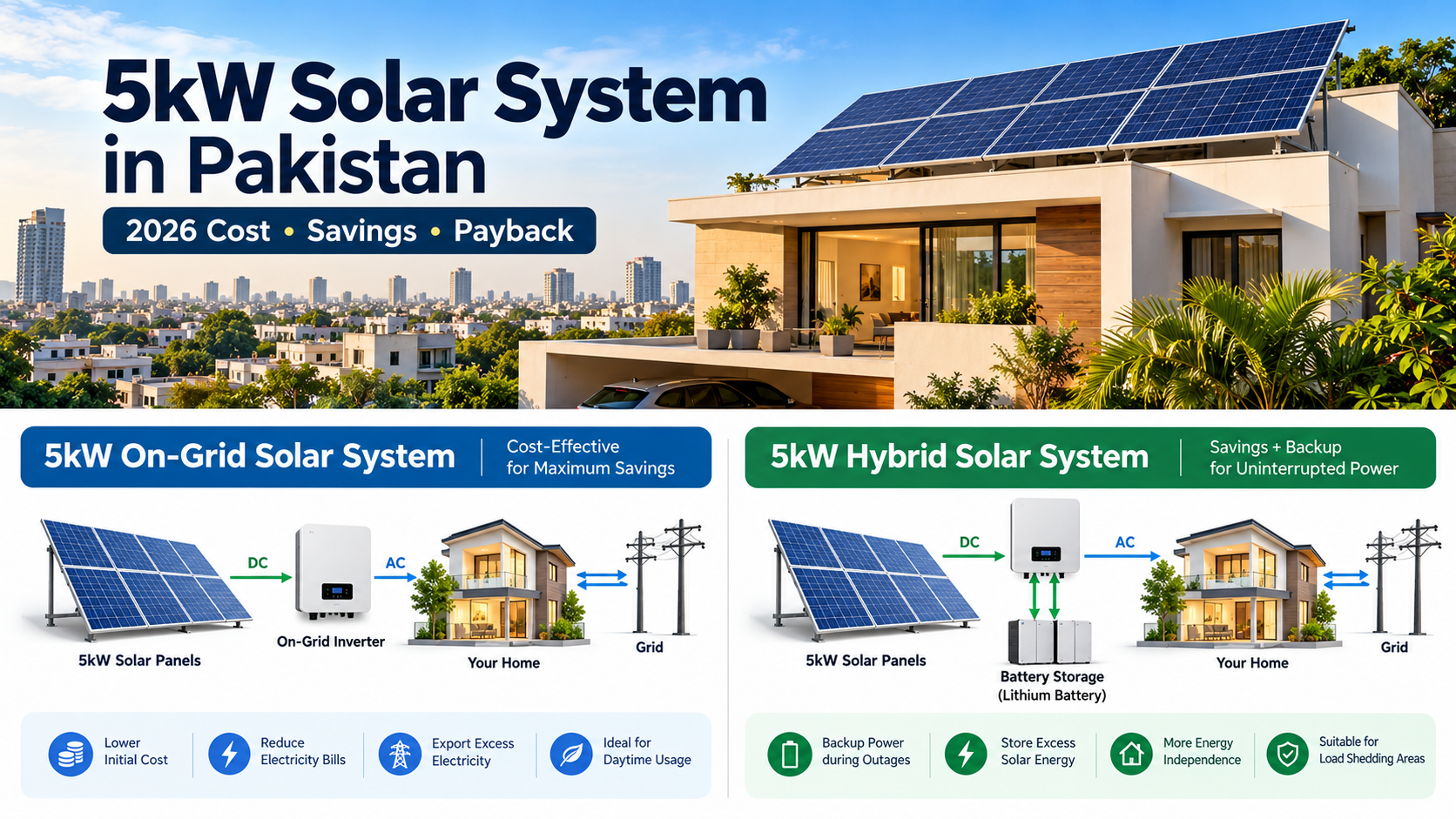
Choosing between an on-grid and a hybrid solar system is one of the most important decisions for homeowners.
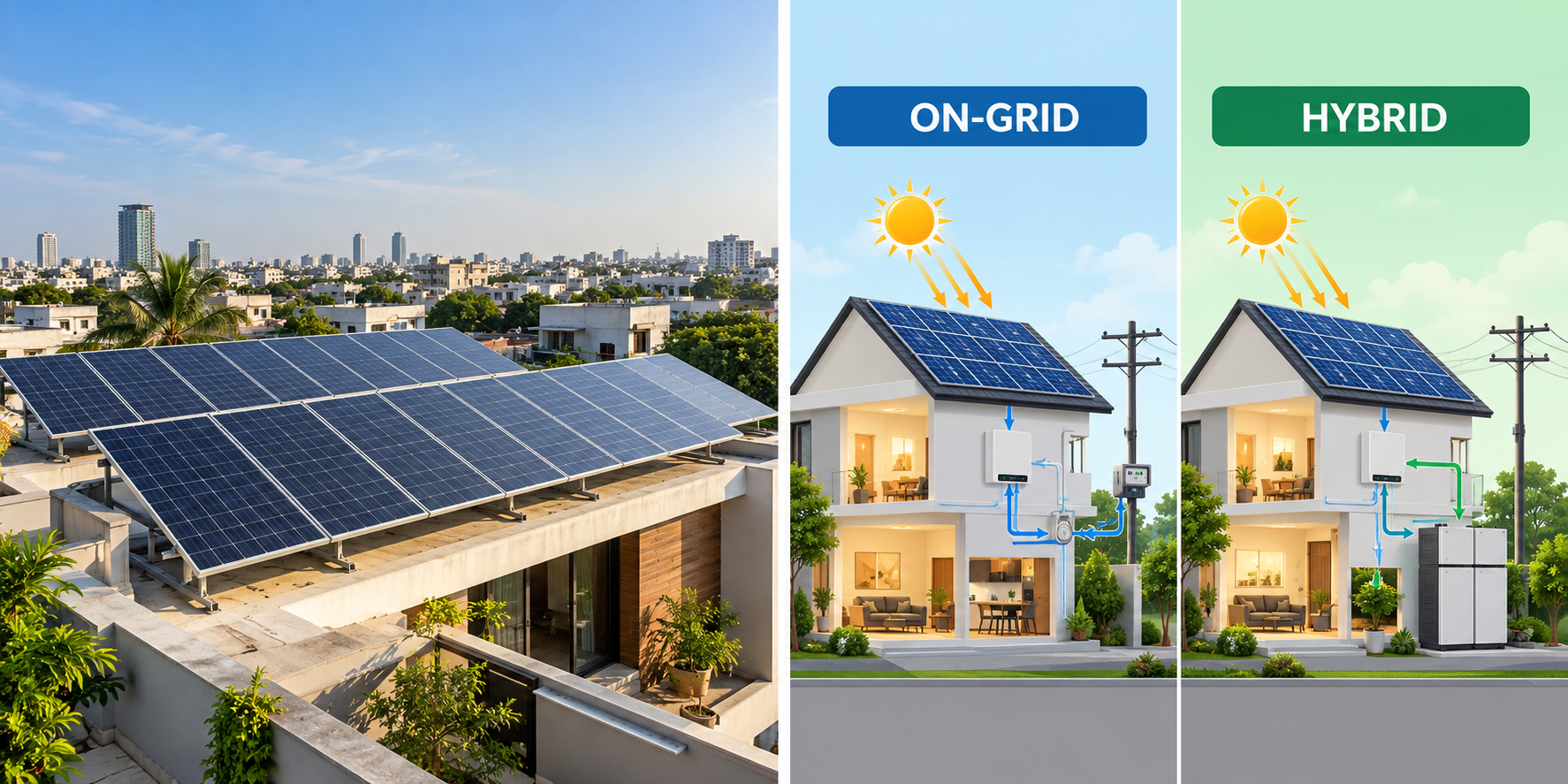
An on-grid solar system connects to the utility grid and generally operates without battery storage.
Advantages:
Lower initial investment
No battery replacement expense
Suitable for properties with reliable grid electricity
Can provide attractive financial returns where daytime consumption is high
Limitations:
Standard grid-tied inverters shut down during power outages for safety.
Nighttime electricity generally comes from the grid.
Export compensation depends on the applicable utility arrangement.
A hybrid solar system combines solar panels with an inverter capable of managing battery storage.
Advantages:
Can provide backup power during outages when properly designed
Stores some solar energy for later use
Helps support essential appliances during load shedding
Offers additional energy-management flexibility
Limitations:
Higher installation cost
Batteries have a limited service life
Storage involves energy conversion losses
Financial payback may be longer than a comparable on-grid system
| Feature | On-Grid | Hybrid |
|---|---|---|
| Initial cost | Generally lower | Generally higher |
| Battery required | No | Usually included |
| Backup during outages | No | Yes, if configured |
| Maintenance complexity | Lower | Higher |
| Battery replacement | Not applicable | May be required |
| Best suited for | Daytime savings | Savings plus backup |
If your primary objective is reducing electricity expenses and your grid supply is reliable, an on-grid system may be financially attractive.
If load shedding frequently affects your home or business, the additional cost of a hybrid system may be justified by the value of uninterrupted electricity.
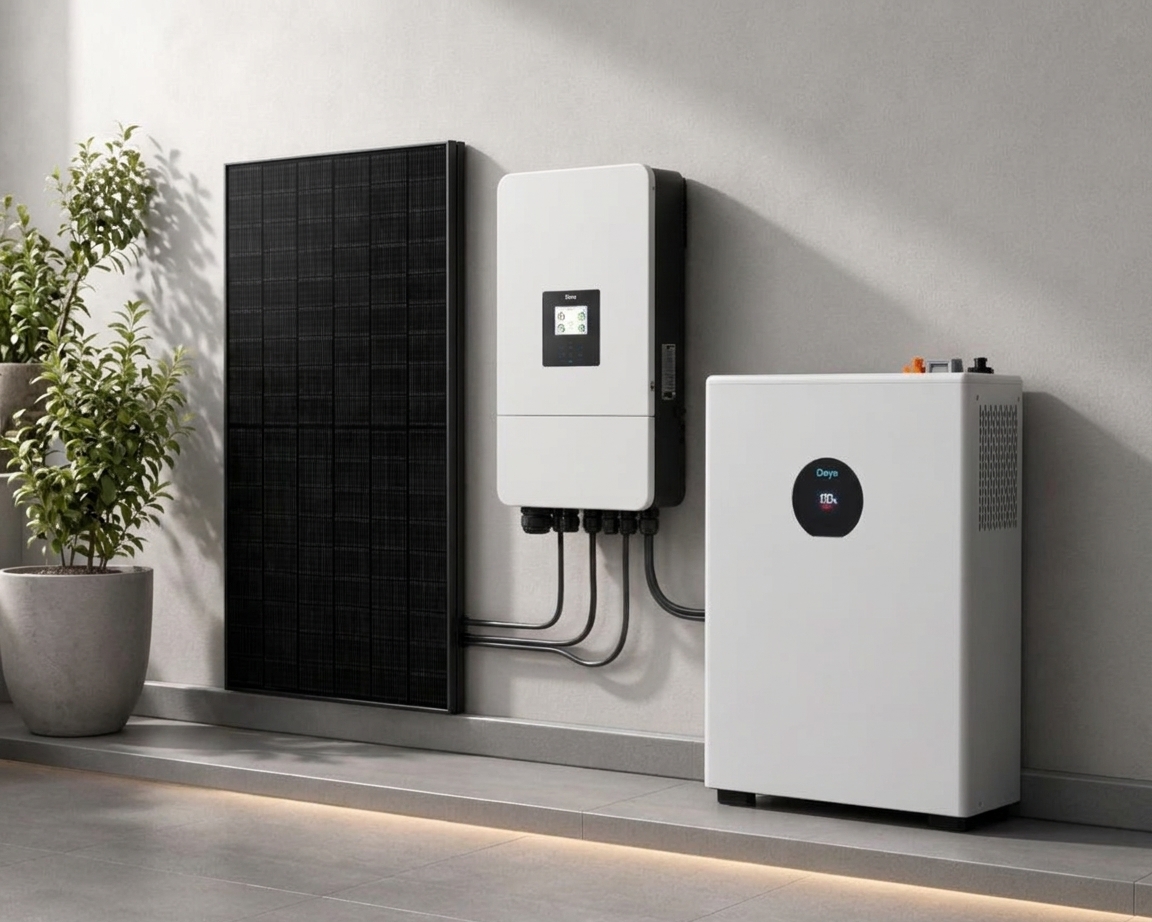
Electricity exported to the grid does not necessarily have the same financial value as electricity consumed directly from your solar panels.
Pakistan introduced the NEPRA Prosumer Regulations in February 2026, with amendments subsequently notified in April and August.
Under the applicable net-billing framework, grid imports and eligible electricity exports are financially accounted for using their respective tariff arrangements. The treatment of individual installations also depends on their approved agreements and applicable regulatory provisions.
This makes solar self-consumption increasingly important when evaluating the economics of a new installation.
For example, consider two homes with identical 5kW solar systems.
Home A operates major appliances during the day and directly consumes a large share of its solar generation.
Home B uses most electricity at night and exports much of its daytime generation.
Even if their panels produce the same amount of electricity, their financial savings may differ significantly.
Before purchasing a system, confirm the latest rules, export-credit rates, connection requirements, and eligibility with your electricity distribution company.
Homeowners with existing agreements should also verify the terms applicable to their individual connections rather than assuming new and existing installations are treated identically.
Yes. Solar performance varies by location because sunlight, weather conditions, temperature, shading, and seasonal patterns affect electricity generation.
Karachi, Lahore, Islamabad, Faisalabad, Multan, Peshawar, and other locations may have different generation profiles.
However, location alone does not determine profitability.
A household in Karachi with high daytime consumption might save more than a household elsewhere that exports most of its solar generation, even if both systems have similar capacity.
A meaningful comparison should consider both local solar generation and how the property uses electricity.
Avoid selecting a system based only on your current monthly bill or the largest available inverter.
Review your electricity consumption, roof space, daytime usage, and financial goals.
Where practical, operate suitable appliances during daylight hours.
For example, scheduling washing machines, water pumps, and other flexible loads during peak solar generation can increase self-consumption.
Trees, neighboring buildings, and rooftop structures can reduce solar panel production.
An installation assessment should identify shading issues and recommend suitable panel placement.
Dust buildup, damaged wiring, equipment faults, and poor maintenance can affect performance.
Follow your installer’s recommended inspection and cleaning schedule.
Batteries provide useful backup, but their additional cost must be evaluated carefully.
Consider how much stored electricity you will actually use, how frequently outages occur, and whether uninterrupted power is financially important for your home or business.
For many households and businesses, solar energy can still be a worthwhile investment in 2026.
However, financial returns vary considerably.
Solar may be particularly attractive when:
Your daytime electricity consumption is substantial.
You have sufficient unshaded rooftop space.
Your proposed system is properly sized.
You receive a competitive installation quote.
The equipment has reliable warranties and technical support.
You understand your applicable grid import and export tariffs.
Solar may be less financially attractive if your electricity demand is very low, your roof receives significant shade, or most generated power cannot be used or credited economically.
The best approach is to evaluate the numbers rather than rely on generalized promises about saving a particular percentage of your electricity bill.
Your savings depend on electricity consumption, solar system size, tariffs, and the amount of solar electricity you use directly. A personalized calculation gives a more useful estimate than a fixed savings percentage.
Generation varies by city, season, installation design, and system performance. A rough illustrative value of 600 kWh monthly is useful for initial calculations, but actual performance must be modeled for your location.
The payback period depends on installation cost and net annual savings. Some illustrative residential scenarios can produce simple payback periods of several years, but no single payback period applies to every property.
Not necessarily. A 10kW system can generate more energy but costs more. The better choice depends on your consumption, available roof area, budget, and expected self-consumption.
On-grid systems generally offer lower upfront costs. Hybrid systems provide battery backup when configured appropriately but require additional investment. Your choice should reflect both savings and power reliability needs.
Yes, solar panels can generate electricity under cloudy conditions, although their output is usually lower than during clear, sunny weather.
Not necessarily. Fixed charges, taxes, nighttime grid usage, seasonal generation differences, and billing arrangements can leave a remaining electricity bill even when solar offsets a substantial portion of your consumption.
They can be, especially when a system is properly sized and maintained. Long-term profitability depends on actual energy savings, equipment lifespan, operating costs, and future electricity tariffs.
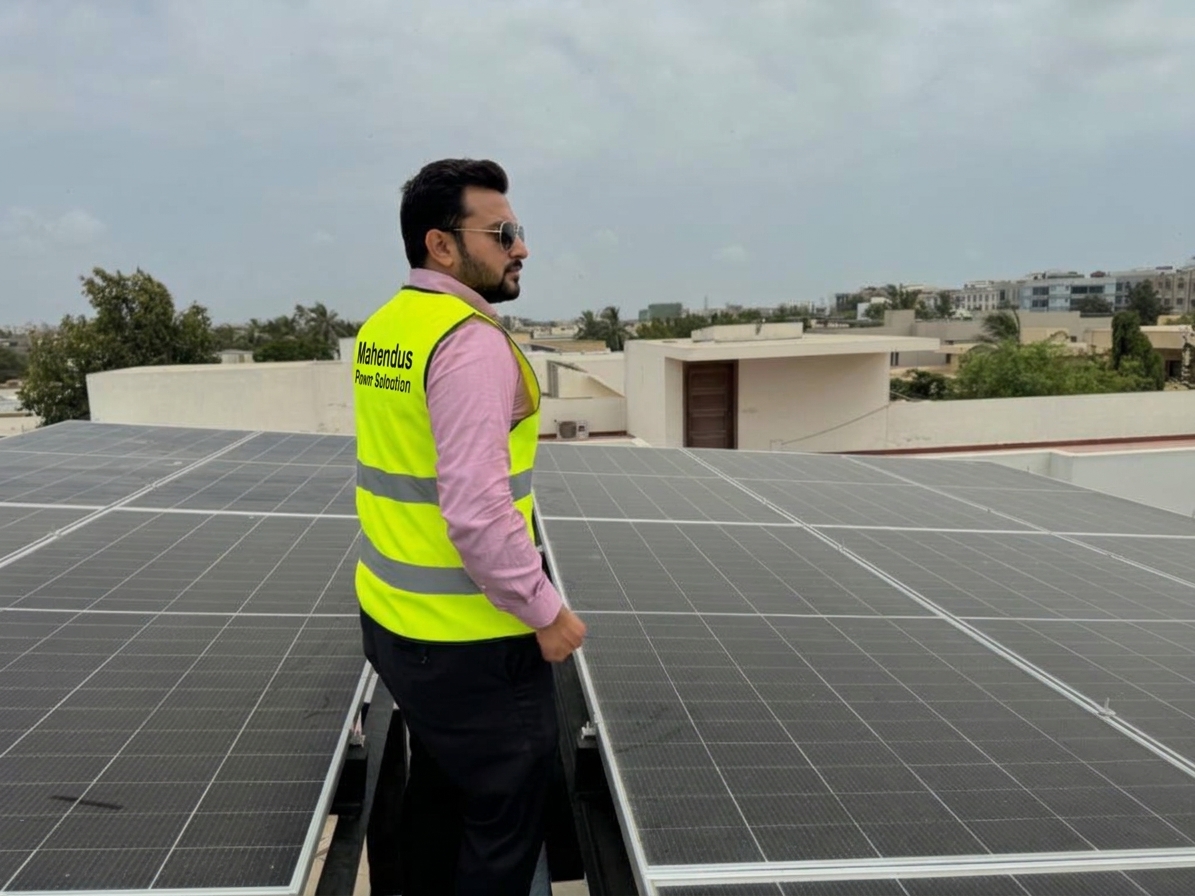
Installing solar panels is a financial decision as well as an energy decision.
A properly designed solar system can reduce dependence on grid electricity, manage long-term energy expenses, and provide greater predictability for households and businesses.
However, successful solar investment starts with understanding your electricity usage and expected return.
At Mahendus Power Solution, we help homeowners and businesses make more informed solar energy decisions through practical tools and professional solar solutions.
Ready to see how much you could save?
Calculate Your Solar Savings for Free — Mahendus Solar Savings & ROI Calculator
Compare estimated solar costs, monthly savings, payback periods, and on-grid versus hybrid systems before taking the next step.
For a more accurate system recommendation and installation quotation, contact Mahendus Power Solution for a professional site survey.